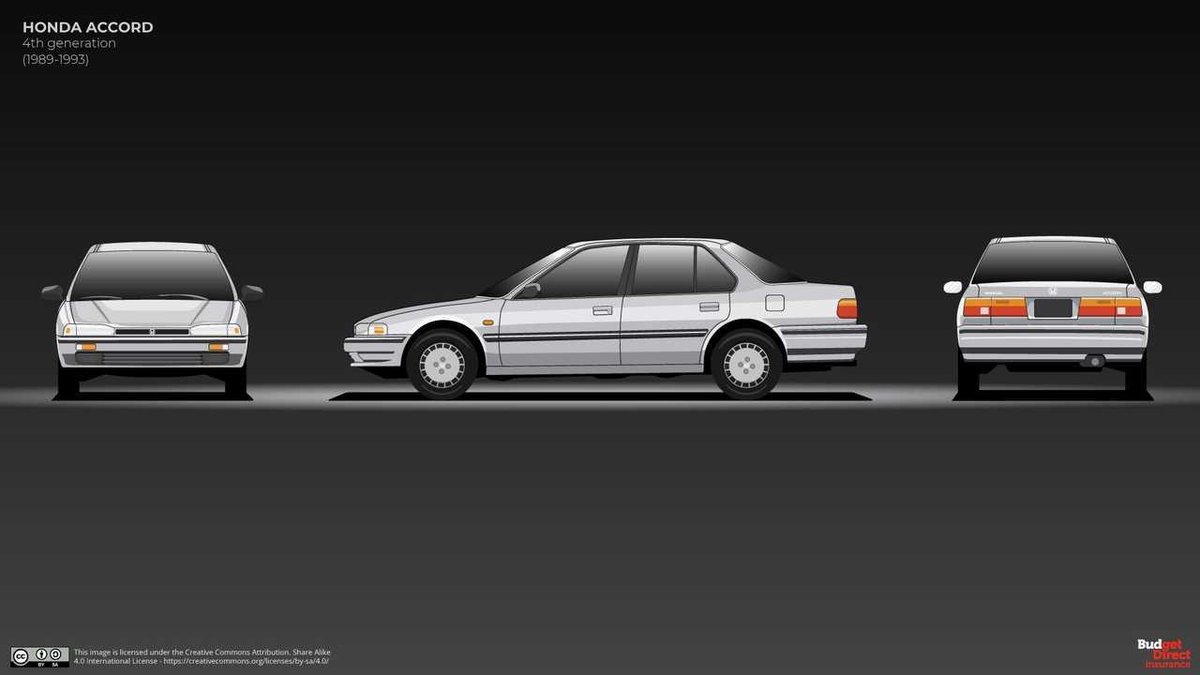
For over four decades, the Honda Accord has stood as a remarkable testament to automotive evolution, becoming far more than just a car. Since its debut in the U.S. in 1977, the Accord has journeyed through 11 distinct generations, each reflecting the changing times, technological leaps, and shifting aspirations of drivers across the nation. It's a name synonymous with quality, reliability, and enduring appeal, consistently ranking as a top-selling mid-size sedan.
This super pillar hub invites you on a fascinating ride through the Accord's illustrious history. We'll explore how this iconic vehicle has continuously adapted, growing in size, sophistication, and capability, often mirroring the very generational shifts in society it served. From its humble beginnings to its current hybrid-dominated lineup, the Accord's story is one of innovation and a deep understanding of what drivers—and indeed, different generations of people—truly value.
The Dawn of an Icon: Forging Foundational Trust
The earliest Honda Accord models laid the groundwork for a legend, establishing a reputation for efficiency, reliability, and thoughtful design. These were the cars that helped shape the Honda brand in America, providing dependable transportation that resonated with families and individuals seeking practical, long-lasting value. While specific details of the very first generations become part of automotive lore, their impact was profound. They became the backdrop for countless family road trips, daily commutes, and significant life moments, fostering a deep sense of loyalty and trust across households.
This foundational era of the Accord often saw vehicles become integral parts of a family's journey, sometimes even passed down through siblings or to new drivers. To understand how these early Accords cultivated such enduring connections and contributed to shared experiences across family lines, exploring concepts around Family Legacy & Continuity can offer valuable insights into how objects and experiences weave into our personal histories.
Adapting to New Eras: Growth, Performance, and Broadening Appeal
As the decades turned, the Accord didn't just survive; it thrived by continuously adapting. Later iterations saw the Accord grow in size and refinement, offering more powerful engines and increasingly comfortable interiors. It moved beyond a purely utilitarian role to embrace more sophisticated styling and performance, catering to an expanding demographic of drivers who sought a blend of practicality and driving pleasure. Each generation brought new features and improved dynamics, responding to an evolving marketplace and the changing expectations of consumers.
This period of growth and diversification highlights how different societal expectations and consumer priorities influence product development. The features and styling choices in these Accords often reflected the dominant desires and values of the era's emerging adult generations. To delve deeper into how these shifts in societal benchmarks and individual perspectives can shape our choices, considering how we Uncover Generational Values and Worldviews can help explain these evolving preferences.
Americanized & Amplified: Tailoring for a Continent (8th Generation: 2008-2010)
The 8th generation of the Accord marked a significant shift, particularly for North American markets. From 2008 to 2010, Honda designed a model specifically tailored for this continent, making it distinct from Accords sold elsewhere. This era saw a larger, more muscular Accord, available with a robust 2.4L four-cylinder engine producing 190 hp or a potent 3.5L V6 offering 268 hp, paired with either a five/six-speed manual or a five-speed automatic transmission. This targeted approach wasn't just about size; it was about speaking directly to the preferences of American drivers.
Crafting a vehicle for a specific market segment, especially one as diverse as North America, requires a keen understanding of various customer demographics and their expectations. This involves more than just design; it's about effective messaging and understanding varied preferences. Discovering more about successful Intergenerational Communication Strategies can shed light on how brands, like Honda, effectively reach and resonate with diverse age groups and cultural contexts within their audience.
Refinement and Efficiency: The Hybrid Horizon Nears (8th Facelift: 2011-2012 & 9th Generation: 2013-2015)
The later years of the 8th generation (2011-2012 facelift) saw Honda fine-tuning the Accord, focusing on improved aerodynamics and engine adjustments to enhance fuel efficiency. The four-cylinder engines offered 177 hp and 190 hp options, while the V6 was boosted to 271 hp. This commitment to efficiency deepened with the 9th generation (2013-2015), which introduced direct injection for the 2.4L four-cylinder engine (185 hp or 189 hp) and paired it with a smooth CVT automatic transmission. The V6 also received an upgrade to 278 hp, coupled with a six-speed automatic.
These engineering advancements represent a continuous effort within Honda to push boundaries and respond to market demands for better performance and fuel economy. Such progress is often the result of diverse teams bringing their expertise and perspectives to the table. Understanding the nuances of Workplace Generational Dynamics can illuminate how collaboration across different age groups within a company fosters innovation and drives continuous improvement in product development.
Tech Tides and Turbo Power: Modernizing for the Digital Age (9th Facelift: 2016-2017 & 10th Generation: 2018-2020)
The Accord's journey into the modern era brought with it a significant infusion of technology and more advanced powertrains. The 9th generation's facelift (2016-2017) introduced revised styling and, crucially, an updated infotainment system, acknowledging the growing importance of in-car connectivity. The 10th generation (2018-2020) truly embraced this shift with an entirely new lineup of turbocharged engines: a 1.5L turbo-four (192 hp) and a potent 2.0L turbo-four (252 hp), both initially available with manual transmission options alongside automatic choices.
The integration of advanced infotainment and turbocharged engines directly appealed to a new wave of tech-savvy drivers. This era highlighted a clear divide in how different age groups interact with and prioritize in-car technology, from navigation and smartphone integration to driver-assist features. To better understand how innovation adoption varies across demographics, exploring the topic of Technology & Generational Gaps can provide valuable context on how individuals from different generations perceive and utilize new digital functionalities.
The Hybrid Future Takes Hold: Size, Sophistication, and Sustainability (10th Facelift: 2021-2022 & 11th Generation: 2023-Present)
The most recent chapters in the Accord's history showcase a decisive move towards electrification and enhanced refinement. The 10th generation's facelift (2021-2022) quietly phased out the manual transmission, streamlining the lineup. Then came the 11th generation (2023-Present), which pushed the Accord's boundaries further. Now exceeding 195 inches in length, it approaches full-size sedan territory, offering enhanced sophistication and technology. While the 1.5L four-cylinder (192 hp with CVT) remains, the significant change is the replacement of the 2.0L turbo-four with a new, more powerful 2.0L naturally aspirated hybrid system (204 hp), signifying a future where hybrid trims dominate the offerings.
This bold step towards hybrid dominance reflects a global shift in automotive priorities, driven by environmental consciousness and the demand for sustainable solutions. It's a testament to how manufacturers evolve not just their products, but their entire philosophy, catering to a future-focused consumer base that values efficiency and reduced environmental impact. The Accord's ongoing transformation underscores its commitment to remaining relevant and appealing to the discerning drivers of today and tomorrow.
The Honda Accord's 11 generations offer a compelling narrative of adaptation, innovation, and enduring appeal. It's a journey that began with a commitment to quality and practicality, evolving through eras of performance, technological integration, and now, a strong embrace of sustainable hybrid power. The Accord hasn't just witnessed the changes of the past four decades; it has actively participated in shaping the automotive landscape, consistently meeting the diverse needs and aspirations of multiple human generations. As it continues its journey, the Accord remains a benchmark of how a legacy brand can continuously reinvent itself, ensuring its place on our roads for decades to come.